稽古 Training
Keiko: the work of practice
Aikido rewards patience and sincere effort over time. Here's what training with us involves, how to begin, what it costs, and how grading works.
初心 Getting started
How to begin
Watch a class
Check a dojo schedule and come to observe. Watching is free, and you are welcome as often as you like. We ask every prospective student to watch at least one class before training, so you understand how we practise.
Speak with us
Talk to the instructor and senior students before or after class. Tell us what draws you to Aikido, and ask whatever you need to know.
Step onto the mat
Join us on the mat. Wear loose, comfortable clothing and we will guide you through the fundamentals. If you are then ready to commit to regular practice, we will talk you through joining the dojo.
武産合気 In the dojo
What our practice looks like
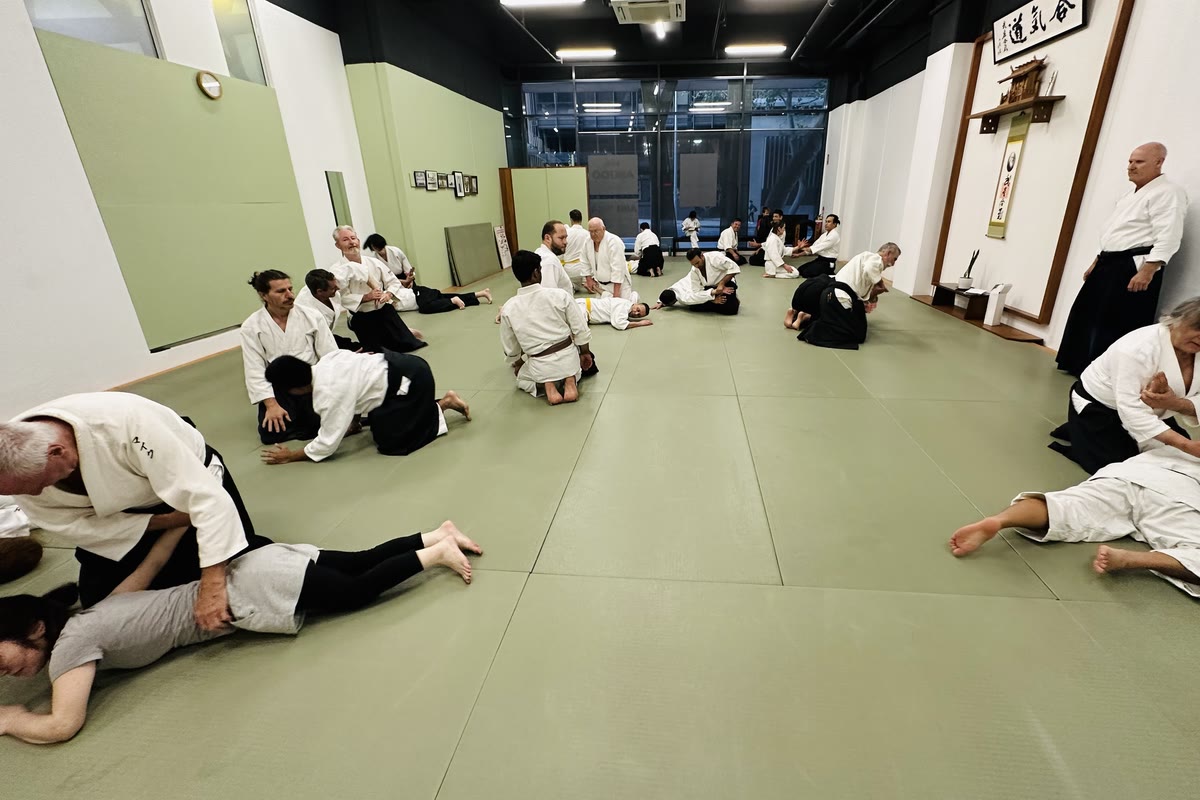
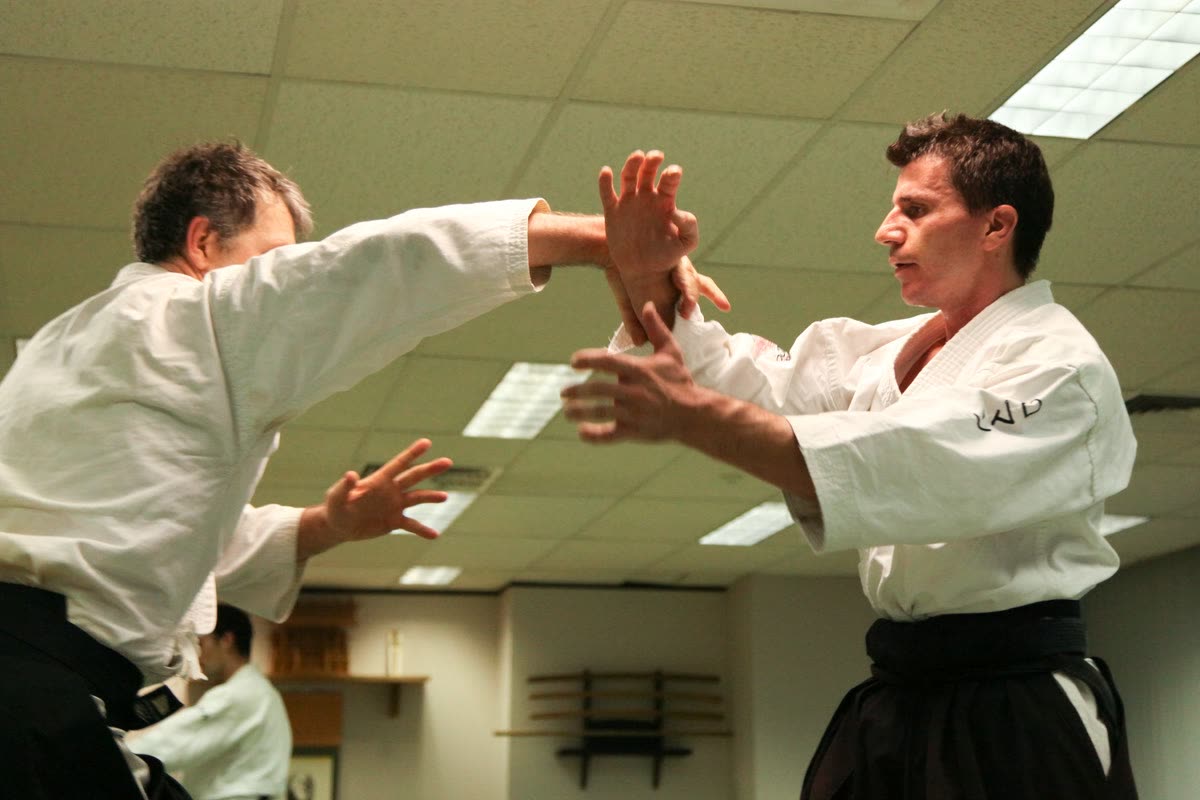
The emphasis of Takemusu Aiki is on fundamental kihon technique: slow, precise movement, energy extension (kokyu power) and sharp hip rotation.
We build strong, stable, effective static forms first, then progress to flowing, faster movement at higher levels. A defining feature is the link between weapons and body art: sword and staff are practised through solo exercises and partner work, and feed directly back into empty-hand technique.
- All levels train togetherBeginners and senior grades share the mat, so the whole dojo grows together.
- Weapons & body as oneBokken (sword) and jo (staff) are integral, not separate.
- No competitionPartners alternate attacking and defending, so you learn both sides of every technique.
会費 Fees
What it costs
Watching a class is free at every dojo, and you are welcome to observe as often as you like.
Saburo Takayasu Sensei
North Sydney
First class free
- Monthly$140
- Monthly, concession$120
- Casual class$20
- Ten-class pass$160
Association fee, yearly
- First year$100
- Each year after$25
Derek Minus Sensei
Ku-ring-gai
Beginners' course for new students
Senior classes
- Monthly$150
- Monthly, concession$75
- Casual class$20
Beginners' course
- All four lessons$80
Children's classes
- Per term$150
- Casual class$20
Association fee, yearly
- Every year$30
Ian Thomson Sensei
Marrickville
First class free
- One class a week, up to five a month$60/mo
- Two classes a week, up to ten a month$120/mo
- Casual class$20
Association fee, yearly
- First year$50
- Each year after$25
級 Grading
A clear path of progress
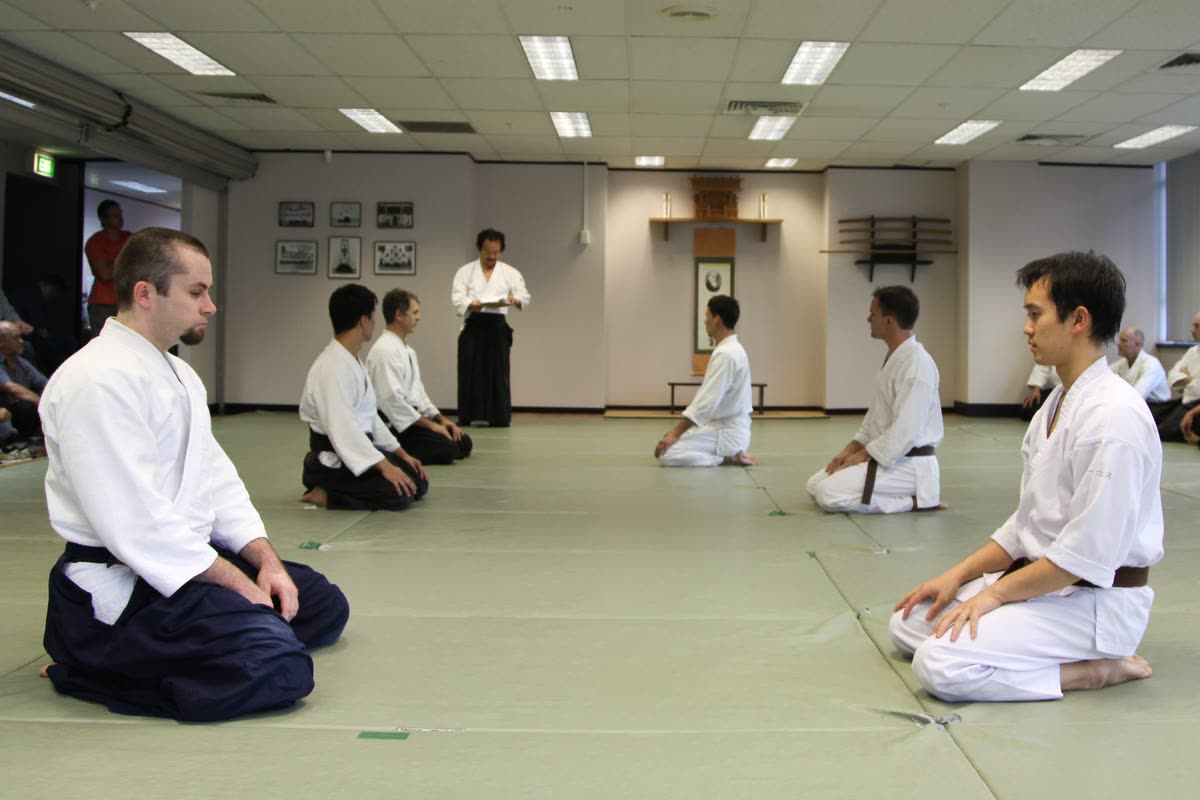
Students work up through the kyu grades, from 5th kyu at the first grading through to 1st kyu, and then on to black belt, shodan and the dan grades beyond it. Each grade carries both a minimum number of classes on the mat and a minimum period at your current grade, so progress comes with consistent attendance over time.
A grading examines fundamental technique, the weapons work that belongs with it, and whether the principles behind both are understood. Senior students are encouraged to teach as they advance, since explaining a technique tests your grasp of it in a way that performing it does not.
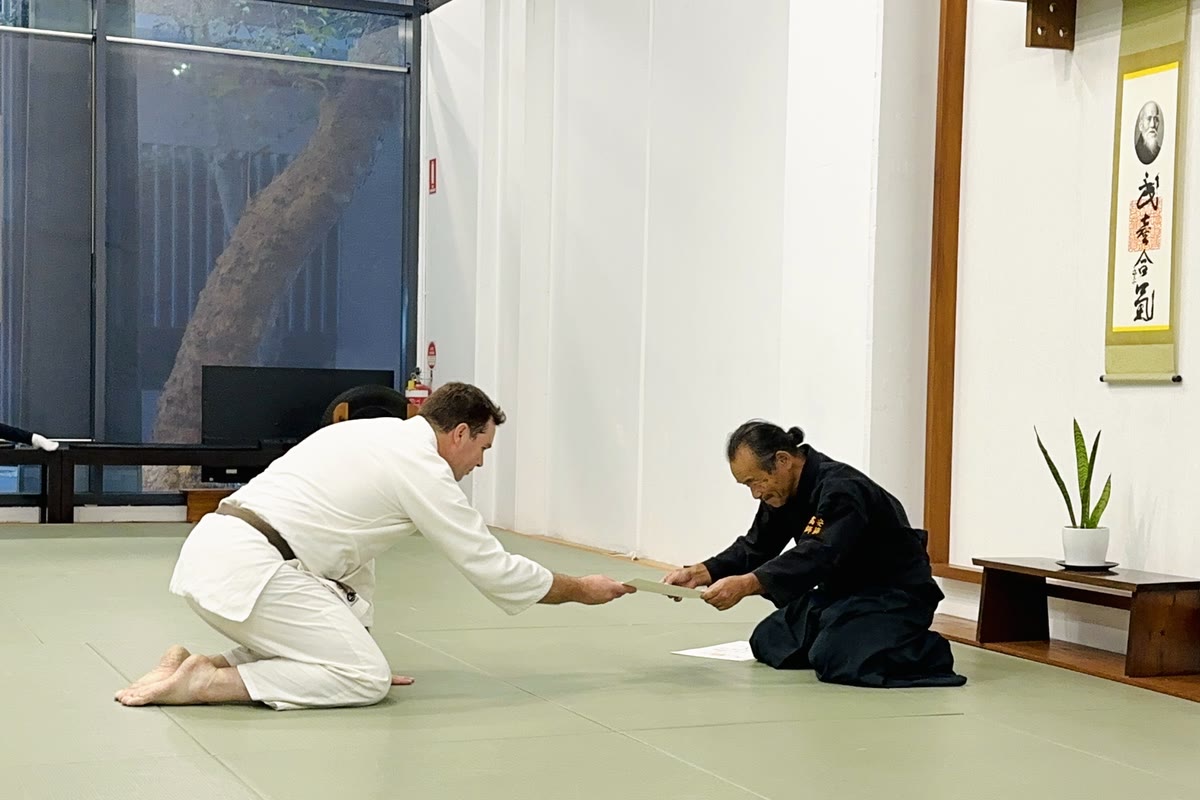
Examinations are held twice a year, usually in March and September. Certificates up to and including 1st kyu are issued by Takayasu Sensei; shodan and the grades above it are issued by Aikikai World Headquarters in Tokyo. Your instructor will tell you when you are ready to be examined.
見学 Observe a class
Visitors are always welcome.
Find the dojo nearest you and arrange to watch a class, and we will take it from there.