合気道 Aikido
The art of harmony
Aikido (ai harmony · ki spirit · dō the way) is a modern Japanese martial art founded by Morihei Ueshiba. We practise it as it was taught in the Founder's own Iwama dojo.
和 What is Aikido?
A martial art of blending, not clashing
Instead of meeting force with force, the Aikido practitioner steps off the line of attack, unbalances the opponent and ends the encounter with a throw, pin or joint lock.
It is built on three principles: non-aggression, non-resistance and non-competitiveness. Aikido emphasises timing, positioning and balance-taking rather than physical strength and size. Movement keeps a firm, stable centre, with spherical rotation expressed as flowing, circular motion. This is what allows a smaller person to defend against a larger and stronger attacker without needing great strength or speed of their own.
Because it does not depend on force, Aikido suits women and men alike, and children as readily as adults, at almost any age. Alongside the technique it asks for proper etiquette and conduct in the dojo, and it teaches students to understand and respect the people they train with.
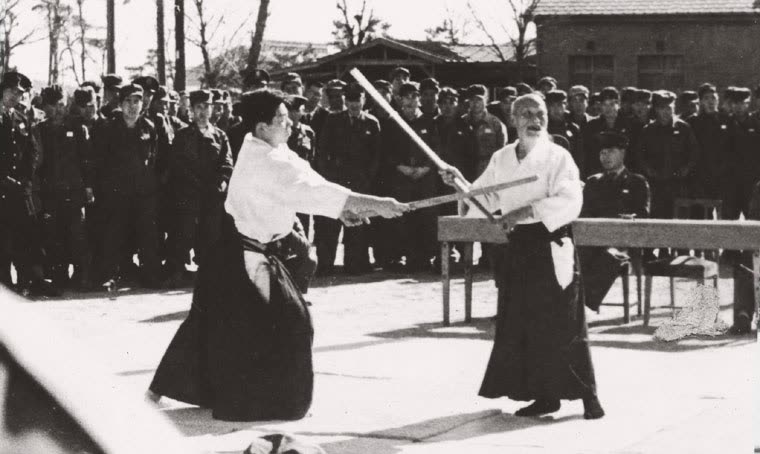
The practice develops mental concentration, balance, reflexes and physical condition, and over the years it works on the character of the person practising as much as on their technique. It descends from the older Japanese martial traditions of the sword, the staff and the spear. At its heart is Ki, which in practice means breath, posture and intention working together, so that the whole body moves as one rather than in parts.
合気道 The three characters
One word, three ideas
Ai
Harmony: joining, blending, coming together.
Ki
Spirit, breath, the universal creative energy.
Dō
The way: a path of lifelong development.
In the dojo this means you harmonise with an attack, lead it to a point of exhaustion, and neutralise it, finding a harmonious way through conflict, in practice and in everyday life.
歴史 A short history
From the founder to Iwama
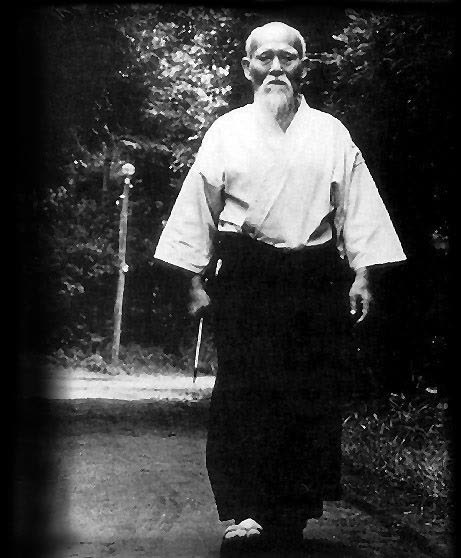
Morihei Ueshiba (1883–1969), known to students as O-Sensei, developed Aikido over more than a quarter of a century, drawing on the older martial traditions of the sword and spear. In 1942 he retired to Iwama, then a small country town, and it was there the art took the name "Aikido". After the war, under his son Kisshomaru Ueshiba and teachers such as Koichi Tohei, Aikido spread around the world, promoted for its graceful flowing movement and its value as self-defence.
O-Sensei's longest-serving student, Morihiro Saito Sensei, trained with him for 23 years and was bequeathed the position of headmaster of the Iwama dojo. Saito Sensei preserved the precise forms and the integration of weapon and body art exactly as he received them, and it is this Iwama tradition that our association carries on.
Morihiro Saito Sensei →師範 Our chief instructor
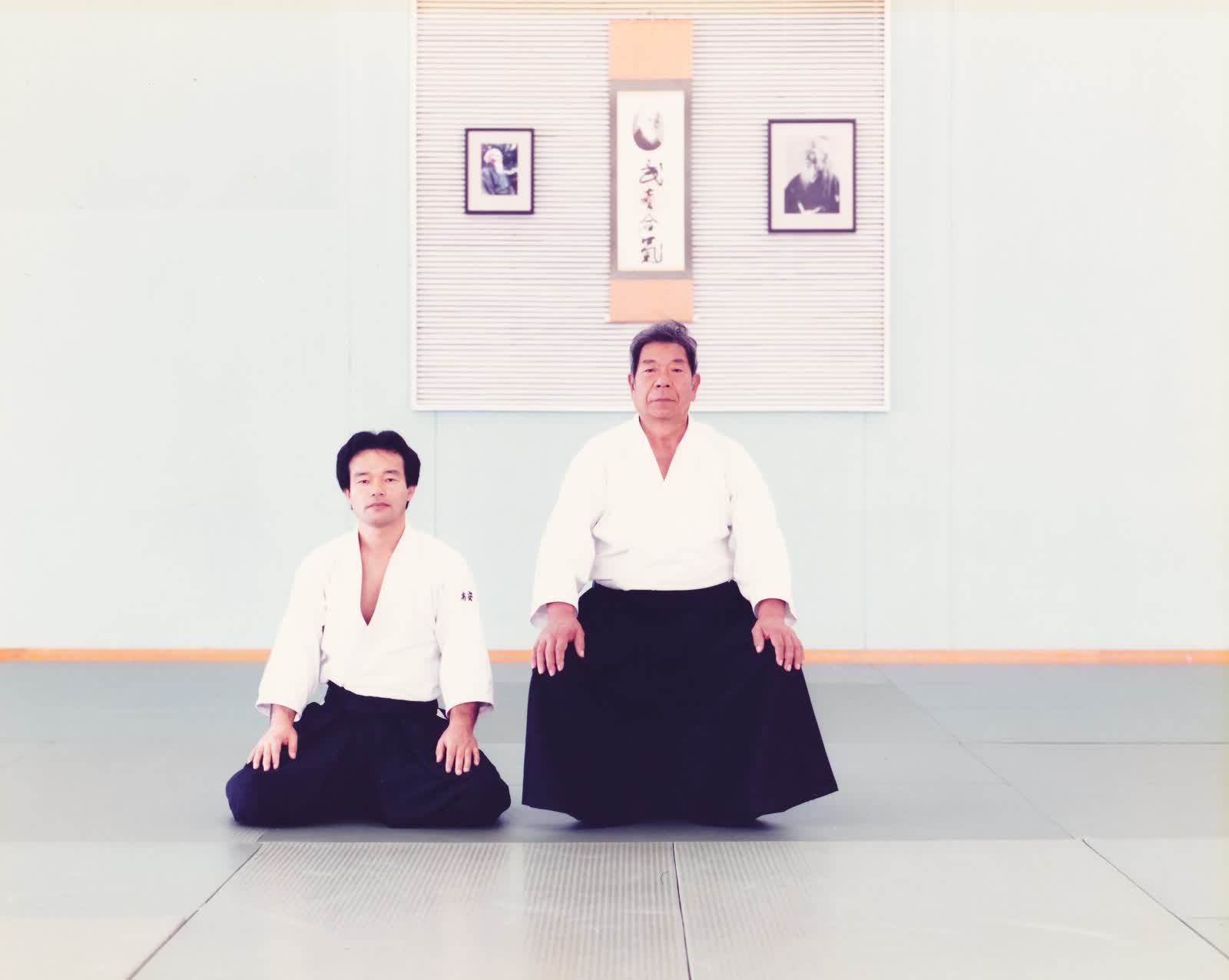
Saburo Takayasu Sensei
7th Dan Shihan · President, Takemusu Aiki Association
Takayasu Sensei actively follows Saito Sensei's wish to preserve Aikido the way it was taught by O-Sensei, and encourages every student and senior instructor to maintain purity of technique and martial spirit.
He believes Aikido training should be strong and martially effective, beneficial and strengthening for body and mind, and at the same time develop the underlying principles of Aiki. A hallmark of his teaching is the interrelationship between weapons and body technique: sword and staff practised alongside empty hand.
稽古 Study the art
See it practised in person.
Aikido is passed on from teacher to student, on the mat. You are welcome to come and watch a class, meet the instructor, and ask us anything while you are there.